
7-9 rue de l’Atlas - Paris, France

Linnea Evanson

Linnea Evanson

Linnea Evanson

Postdoctoral Researcher

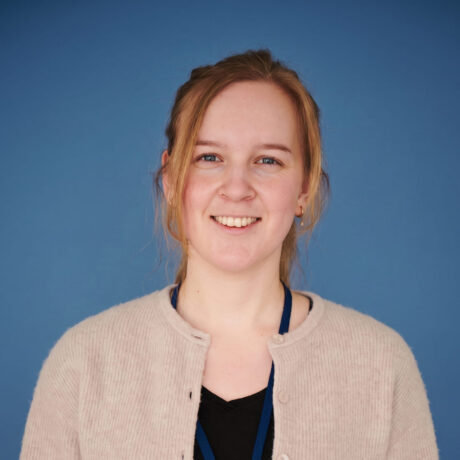
Linnea Evanson is a postdoctoral researcher in AI and Neuroscience at the Hospital Foundation Adolphe de Rothschild (Paris), where she is part of the BrainAI team led by Dr. Jean-Rémi King and Dr. Pierre Bourdillon. Her work sits at the intersection of artificial intelligence and the neuroscience of language, with a current focus on building foundation models for intracranial EEG (iEEG).

She completed her PhD at the École Normale Supérieure (2021–2024) under the supervision of Dr. Pierre Bourdillon and Dr. Jean-Rémi King, funded by the Marie Skłodowska-Curie Actions COFUND fellowship (AI4theSciences). Her doctoral research, entitled "Language Acquisition in Brains and Algorithms", investigated how language representations emerge and evolve across development, using both neural recordings and deep learning models. She also undertook a research internship at Meta AI (FAIR, Paris) in 2022, which led to a publication at ACL 2023.

Prior to her PhD, she earned a first-class MEng in Biomedical Engineering from Imperial College London (2016–2021), and spent a year working in client innovation and data science at Accenture, London in 2020. Her interest in deep learning dates from the time of her masters thesis when she authored a paper on biomimetic computations for neural network robustness.

Linnea works at the intersection of artificial intelligence and neuroscience, combining machine learning with the study of how the brain processes and acquires language. Her work spans the full arc from raw neural signals to high-level computational models, with a particular focus on building and applying large-scale AI models to brain data.

She has broad experience in deep learning, natural language processing, and neural decoding, and brings an interdisciplinary perspective shaped by training in biomedical engineering, cognitive science, and AI. She has contributed to open-source scientific software and has industry experience from her time at Meta AI and Accenture, as well as research experience in ethical AI at Oxford Brookes University.

Linnea's research agenda over the coming years centers on understanding the similarities and differences in how the brain encodes, maintains, and develops language - and how AI systems do.

Neural foundation models: Developing large-scale, generalist models trained on brain recordings that can be fine-tuned for a range of downstream neuroscience and clinical tasks, including speech decoding and language mapping.
Language development across the lifespan: Tracing how linguistic representations in the brain change from early childhood to adulthood, leveraging rare paediatric iEEG datasets and state-of-the-art LLM embeddings.
Neural codes for sequential language: Understanding how the brain maintains and processes sequences of words over time, including the dynamic neural mechanisms that prevent interference between overlapping representations.
Bridging AI and neuroscience: Using insights from how brains learn language to inform more biologically plausible and efficient AI architectures, and vice versa.
Clinical translation: Working toward real-world applications of neural decoding, including brain-computer interfaces for patients with speech disorders.

Publications & Preprints

Emergence of Language in the Developing Brain — under review at Science Advances (2024/2025), with C. Bulteau et al.; featured in a Meta AI blog post and covered by Daily Neuron
From Minutes to Days: Scaling Intracranial Speech Decoding with Supervised Pretraining — submitted to NeurIPS 2026, with L. Zhang, H. Banville, S. Panchavati, P. Bourdillon, J.-R. King
Temporal structure of the language hierarchy within small cortical patches — manuscript (2026), with J. Gadonneix et al.
Language acquisition: do children and language models follow similar learning stages? — Findings of the Association for Computational Linguistics (ACL 2023), with Y. Lakretz and J.-R. King
New modalities of cortical electrophysiology, perspectives in medical research and human physiology — Fyssen Annals (2023)

Conferences & Presentations

Tutorial & presentation, Workshop on Neural Decoding, Cognitive Computational Neuroscience (CCN), Amsterdam (2025)
Talk at ENS Embed-days Colloquium: "Decoding the language hierarchy in the neural responses of the child's brain using self-supervised LLM embeddings" (2025)
Oral presentation, Society for Neuroscience, Washington D.C.: "How do language representations change from 3 to 19 years old?" (2023)
Lightning talk & poster, Society for the Neurobiology of Language, Marseille: "Language acquisition in brains and algorithms: towards a systematic tracking of the evolution of language representations in children" (2023)
Oral presentation, New Methods in Developmental Neuroscience workshop (Neuro-AI and Pediatric OPM/MEG), Birmingham: "How do language representations change from 3 to 19 years old?" (2023)
Poster, Association for Computational Linguistics (ACL), Toronto: "Language acquisition: do children and language models follow similar learning stages?" (2023)
Poster, LOT Graduate School of Linguistics: "Comparing language acquisition in children and deep language models" (2022)

Teaching

Guest lecturer, NeuroTech Master, Université Paris Cité (2025)

Open Source

Hands-on tutorial notebooks for the CCN 2025 workshop "Language: In search of a neural code" — publicly available on GitHub
Contributor to NeuralSet, an open-source Python package for Neuro-AI

Awards

EELISA Student Scientific Winner, 3rd Prize (2024)
PhD Scholarship, Marie Skłodowska-Curie Actions COFUND — AI4theSciences (2021)

Science Communication

"New Study Reveals How Language Acquisition in the Brain Unfolds From Childhood to Adulthood" — Daily Neuron (2025)
"Emergence of Language in the Developing Brain" — Meta AI blog post (2025)
Speaker, Women and Girls in Science Day, ENS (2024)
Research Demonstrator, R&T Cognition Day, Institut Carnot Cognition (2023)
"Why can't AI generate hands properly (yet)?" — Le Monde video (2023)
"Language acquisition: do children and language models follow similar learning stages?" — Meta AI blog post (2023)

Personal Website & Links

LinkedIn : Profile
X / Twitter : @EvansonLinnea
Google Scholar : Citations