We are proud to welcome you to the official platform of the TITAN Team. Rooted at the intersection of advanced neurosurgery, computational linguistics, and artificial intelligence, the TITAN laboratory is dedicated to cracking the neural codes of human cognition and language processing. By combining unique clinical insights with cutting-edge machine learning, our mission is to redefine how we observe, decode, and model brain dynamics.
Our research addresses a fundamental scientific challenge: mapping brain activity across multiple spatial scales—ranging from single-neuron multi-unit recordings in surgical settings to non-invasive whole-brain dynamics via MEG, EEG, and fMRI. Through these rich, multi-scale datasets, TITAN builds predictive computational models that open new frontiers for both cognitive neuroscience and translational clinical applications.
Lab Leadership
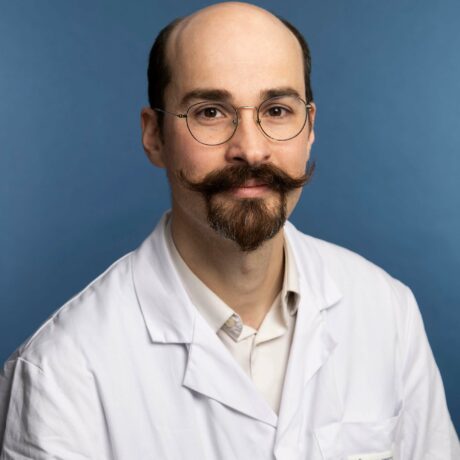
Dr. Pierre Bourdillon
Founder & Lead Investigator, Neurosurgeon
Over the next five years, Dr. Pierre Bourdillon is leading the expansion of the TITAN research team, aiming to build next-generation encoding and decoding architectures. Navigating between the operating room and computational data labs, his vision focuses on scaling clinical infrastructure to capture high-density data. This framework allows the lab to engineer innovative solutions for speech restoration, advanced brain-computer interfaces (BCIs), and international data-sharing collaborations.
Our Core Research Axes
The TITAN lab operates as a highly integrated, interdisciplinary ecosystem structured around four primary fields of expertise:
■
■
■
■
Navigate through our dedicated team tabs to discover our researchers’ specific projects, full publication records, and open-source models.